Vibe Lifestyle
5 Traditional Indian Self-Care Rituals Making a Comeback in 2026
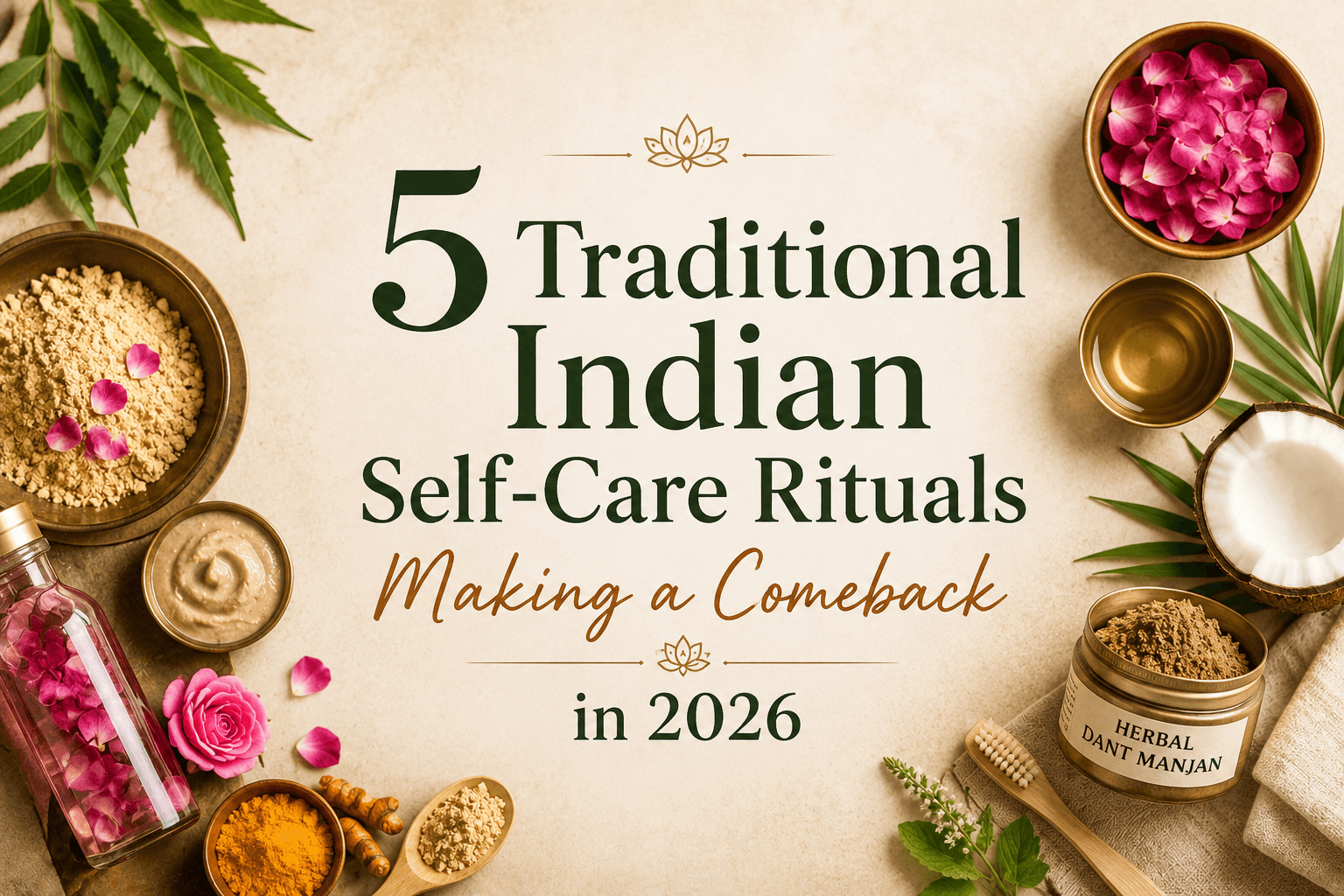
Explore timeless Indian wellness traditions like ubtan cleansing, rose water skincare, coconut oil massage, and herbal oral care that are returning to modern self-care routines.
How Simpler Wellness Habits Are Returning for Better Skin, Hair & Stress Relief
Modern skincare and wellness routines often feel more overwhelming than relaxing.
People today are spending heavily on serums, scalp treatments, exfoliating acids, hair masks, and endless “must-have” beauty products, yet concerns like sensitive skin, dryness, hair fall, stress, and burnout continue to grow.
As a result, many people are quietly returning to something far simpler: traditional Indian self-care rituals.
From ubtan and rose water to coconut oil champi and weekly face packs, these timeless practices are making a comeback because they feel gentler, affordable, emotionally calming, and easier to maintain consistently.
Unlike trend-driven beauty routines, traditional Indian self-care was never designed around perfection or excessive consumption.
These practices focused on:
- consistency
- seasonal care
- simple ingredients
- balance
- gentle maintenance
- slowing down
And surprisingly, many of these traditional rituals still feel deeply relevant today.
Quick Takeaways
- Ubtan is returning as a gentle alternative to harsh exfoliation
- Rose water remains a lightweight favorite for summer skincare
- Coconut oil champi supports scalp care and relaxation
- Herbal dant manjan is regaining popularity among minimalist wellness followers
- Weekly homemade face packs feel easier and more sustainable than complicated skincare routines
- Traditional Indian wellness practices appeal to people seeking affordable and calming self-care habits
Why Traditional Indian Self-Care Rituals Feel Relevant Again
Modern wellness culture can sometimes feel exhausting.
New skincare products launch constantly. Trends change every few weeks. Multi-step beauty routines often become expensive, difficult to maintain, and sometimes irritating for sensitive skin.
Traditional Indian self-care worked differently.
Most practices were built around:
- simple ingredients already available at home
- repetitive habits followed consistently
- seasonal skincare adjustments
- affordable wellness routines
- prevention and maintenance instead of aggressive treatment
In many Indian households, these rituals were simply woven into everyday life long before “self-care” became a wellness industry trend.
Sunday champi sessions, homemade ubtan, herbal oral care, and weekly face packs were rarely considered luxury rituals. They were ordinary moments of care shared across generations.
That simplicity is exactly what many people are rediscovering today.
1. Ubtan Is Returning as a Gentle Alternative for Sensitive Skin
What Is Ubtan?
Ubtan is a traditional Indian skincare paste commonly made using ingredients like gram flour (besan), turmeric, sandalwood, milk, curd, or rose water for gentle cleansing and exfoliation.
For generations, many Indian households used ubtan before modern face cleansers became common.
Today, interest in ubtan is growing again because many people are dealing with:
- redness
- dryness
- skin barrier damage
- irritation from over-exfoliation
- sensitivity caused by strong active ingredients
Unlike harsh scrubs or aggressive acids, traditional ubtan recipes were designed to cleanse the skin gently without leaving it feeling stripped.
In many families, recipes changed depending on:
- weather
- humidity
- skin type
- season
- age
Modern skincare discussions around “skin barrier care” are surprisingly similar to these older practices.
Common Uses of Ubtan Today
Many people use ubtan for:
- tan removal
- dull skin
- gentle exfoliation
- bridal skincare preparation
- summer skincare routines
- minimalist skincare habits
Simple Homemade Ubtan Recipe
Mix:
- 2 spoons gram flour (besan)
- a small pinch of turmeric
- enough rose water or milk to make a soft paste
Apply gently for 5 minutes and rinse with lukewarm water.
For some people, this simple cleansing ritual feels calmer and less irritating than heavily exfoliating skincare routines.
If you prefer ready-to-use traditional skincare products, explore our Ubtan Cleansing Bar Collection.
2. Rose Water Continues to Be a Simple Summer Skincare Essential
Despite thousands of skincare launches every year, rose water continues to survive almost every beauty trend cycle.
There is a reason for that.
It feels:
- lightweight
- cooling
- refreshing
- uncomplicated
- easy to use in daily routines
In many Indian households, rose water has traditionally been used during hot weather to refresh the skin after long summer days, sun exposure, or humidity.
Even today, many people prefer rose water because it fits naturally into minimalist skincare routines without feeling heavy or greasy.
Common Ways People Use Rose Water
- as a facial mist during summer
- after cleansing
- before makeup
- after sun exposure
- to refresh tired skin during work hours
- during hot and humid weather
Part of its popularity comes from simplicity.
Unlike complicated skincare routines that require multiple steps, rose water offers a quick feeling of freshness without making routines feel overwhelming.
For people living in warm climates, that simplicity can feel especially comforting.
You can explore our Pankhudi Rose Water for everyday hydration and refreshing skincare.
3. Coconut Oil Champi Is Becoming a Relaxing Hair & Stress Ritual Again
Hair fall remains one of the most searched beauty concerns in India.
Stress, hard water, heat styling, pollution, poor sleep, and hectic schedules are affecting scalp health more than ever.
That is one reason many people are returning to weekly coconut oil champi.
In many Indian families, weekend champi sessions were part of childhood routines long before scalp spas and luxury hair rituals became popular.
For many households, champi was less about beauty and more about slowing down.
Why Coconut Oil Is Still Widely Used
Traditionally, coconut oil has been used for:
- dry scalp
- scalp massage
- frizzy hair
- deep conditioning
- body moisturising
- softening rough hair texture
Many people feel regular oil massage helps their scalp feel less dry while making hair softer over time.
The massage itself may also feel emotionally calming after stressful days.
Modern conversations around stress relief, nervous system regulation, and slower self-care rituals are also contributing to the renewed popularity of champi.
How to Use Coconut Oil for Hair
- Warm the oil slightly
- Massage gently into the scalp for several minutes
- Leave for at least 30 minutes
- Wash using a mild shampoo
For many people, weekly champi becomes less about chasing perfect hair and more about maintaining a consistent self-care habit.
Explore our Cold-Pressed Coconut Oil Collection inspired by traditional Indian wellness rituals.
4. Herbal Dant Manjan Is Returning as People Look for Simpler Oral Care
People today are paying closer attention to ingredient labels, not only in skincare, but also in oral care products.
Searches related to:
- natural toothpaste
- herbal tooth powder
- Ayurvedic oral care
- home remedies for bad breath
- traditional oral hygiene practices
continue to grow steadily.
Before commercial toothpaste became dominant, many Indian households commonly used herbal dant manjan prepared using ingredients like:
- neem
- clove
- mint
- black salt
- charcoal
These formulations were often appreciated because they felt refreshing, strong, and uncomplicated.
How Herbal Tooth Powder Is Commonly Used
- Take a small amount of powder
- Brush gently over teeth and gums
- Rinse thoroughly with water
Today, many people are exploring herbal oral care because they prefer simpler formulations and fewer artificial ingredients in daily routines.
Explore our Herbal Dant Manjan & Natural Mouthwash Collection.
5. Weekly Face Packs Are Replacing Overcomplicated Skincare Routines
Many people are becoming exhausted by constantly changing skincare trends.
One week the internet recommends skin cycling. The next week everyone talks about repairing the skin barrier. Soon another “must-have” ingredient becomes viral.
As a result, many people are returning to simple weekly face packs that feel manageable and familiar.
Traditional Indian skincare has long used ingredients like:
- multani mitti
- sandalwood
- turmeric
- curd
- rose water
for weekly cleansing and oil control.
Easy Homemade Face Pack for Oily Skin
Mix:
- multani mitti
- rose water
- a pinch of turmeric
Apply for 10 minutes and rinse gently.
Many people enjoy these routines because they feel calmer and easier to maintain compared to large multi-step skincare systems.
Why Simpler Self-Care Often Feels More Sustainable
One reason traditional wellness rituals continue to feel relevant is because they were designed to fit ordinary life.
They did not depend on:
- expensive products
- constant consumption
- complicated routines
- chasing every new trend
Instead, they focused on small repeatable habits like:
- weekly oiling
- gentle cleansing
- homemade face packs
- herbal care
- seasonal self-maintenance
Many people today are not necessarily looking for perfect beauty routines.
They are looking for habits that:
- feel practical
- reduce irritation
- save money
- feel emotionally calming
- fit realistically into busy schedules
- support slower wellness routines
That is exactly why traditional Indian self-care rituals continue to return generation after generation.
Final Thoughts
Traditional Indian self-care rituals survived for generations because they were simple enough to practice regularly.
They evolved in climates with heat, dust, humidity, and changing seasons using ingredients that were practical, affordable, and easily available at home.
In many households, these rituals were never about perfection.
They were small acts of care repeated consistently over time.
In a world filled with complicated beauty trends and endless product recommendations, many people are rediscovering the comfort of slower and gentler wellness habits again.
Sometimes, a simple routine followed consistently can feel more sustainable than constantly chasing the next trend.